They may not be, but we do need to seriously rethink how and why they are.
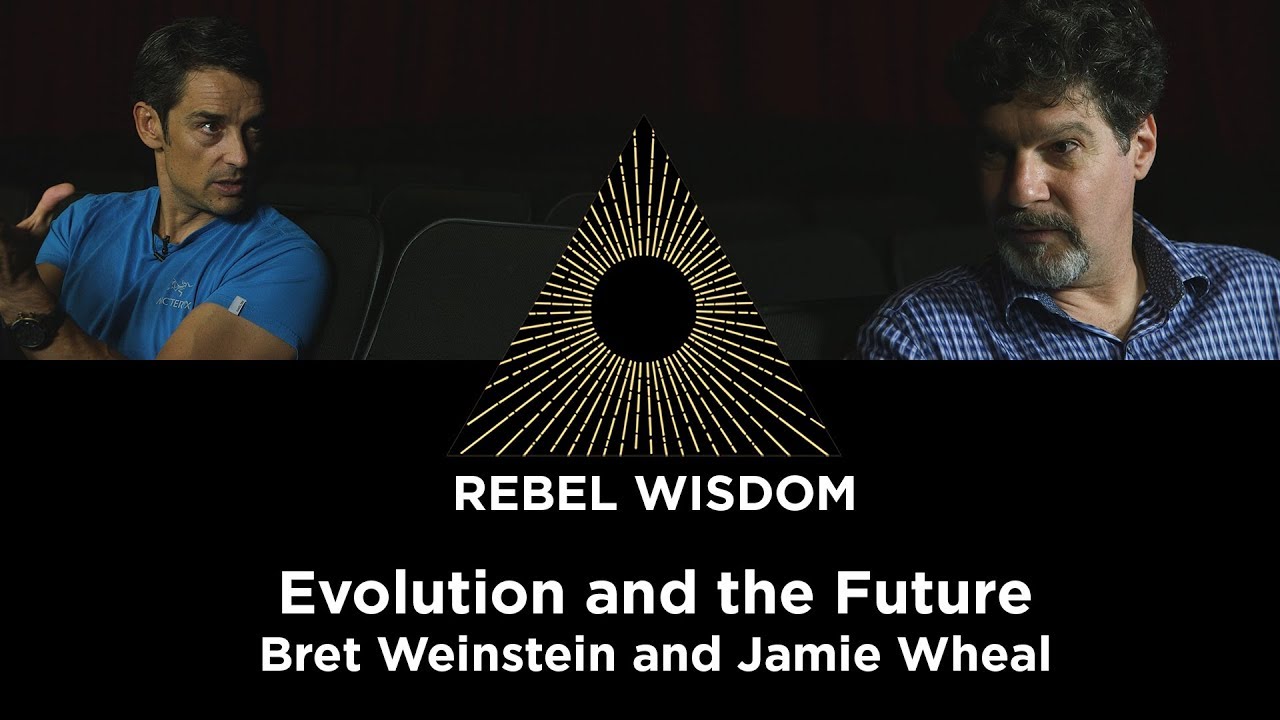
One of the threads you were weaving into your pointer toward ultimate reality was the Weinstein clip, if I’m not mistaken. I had mentioned when he was first referenced that I think he’s fundamentally confused, but perhaps the word “off base” would have been more appropriate. To me – and I could be wrong – he is in essence an E.O. Wilson-lite; that is a kind of revised and more socially acceptable variant of Wilson’s sociobiology, which fell out of favor almost as quickly as it fell in.
The direct refutations of it and most materialist/physicalist/reductionistic theories of how we have ended up where we are today are many. Raymond Tallis (The Explicit Animal, Aping Mankind, The Hand) and Kenan Malik (Man, Beast, Zombie) immediately spring to mind, but they only say why such theories don’t work. They are not strong on what possible alternatives might be (or if they do so, it is only implicitly). And there are alternatives, such as Malcolm Donald’s The Origins of the Modern Mind, but one always gets the feeling one is dealing with only part of the picture. (Hell, on the other side of that coin, Aurobindo’s The Life Divine is also an alternative, but so much so that I think it is wiser to show that there are not-so-large (and radically different) alternatives that help sensitize us to the problematic involved and which can provide additional foundations for dealing with such radical alternatives, if I may phrase it thusly.) These are merely examples, and I mention them only because I’ve read them … I make no claim to being any kind of expert, or even an informed layman in the field.
Nevertheless, I would like to mention another (short … <150 pp.) text that may be worth considering. It came up in one of the Aurobindo threads, so there’s no way I can know whether you saw reference to it or not, but it is Thomas Nagel’s Mind & Cosmos. Its subtitle, “Why the Materialist Neo-Darwinian Conception of Nature is Almost Certainly False” is not so much hyperbole as a clear statement of intent. And since that conception is, in my mind, almost certainly false, he explores what that means and what it would take to develop a (or other) potential alternative(s). It’s about rethinking what we think we know in this regard.
As a matter of fact, should there ever be a lull in the reading-group action around here, this would be an excellent text for a group reading, as we have quite a few participants here who have much expertise to contribute to the many and diverse aspects of the topic that need to be re-thought about.
Truth be told, I’ve been chewing on that line I quoted above ever since I read it, and it has occurred to me that you are a pretty big fan of biological evolution, based on references and inferences you have made in various postings. As it’s not a topic per sé that I want to delve into (precisely for the reasons Nagel presents in Chapter 1 of his book), I thought I’d at least suggest the text, for I think it is one that even if you can’t exactly sink your teeth into it, it still would give you a whole lot to chew on.
Just a thought.