And, Marco, to quote your wise grandmother, you will lose everything.
We are losing everything…
2.9 billion birds have disappeared in North America. All of you birdwatchers, will have nothing to watch for…
I have not heard any bird today. And I have been listening…
And you Buddhists need not worry about reincarnating. There will be no more reincarnating for humans…this planet is folding up…our species is going to take a very long nap…perhaps deleted…
I dreamed that the moon began to spin around the earth causing total confusion among the humanoids and that I am dissolving into the void…it was a pleasant void… formless… empty…nihilism with a twist…
Say your poem, now, before you forget it…I recall a lovely one…
We are dying, we are dying, so all we can do
is now to be willing to die, and to build the ship
of death to carry the soul on the longest journey.
A little ship, with oars and food
and little dishes, and all accoutrements
fitting and ready for the departing soul.
-D. H. Lawrence
This is some of the mind-stuff that I have gathered for my journey and that I have put into my tiny tug boat…
These are very pretty images, Michael. But I much prefer this image you communicated with in prep for the Death Cafe. Notice the gesture, the vocal qualities. You convey your own, unique rhythm. This is what I find missing from the pretty pictures. Your drawing/speaking/feeling/coloring is for me much more satisfying and informative. You and I, as we share our messy, affective drawings, co- touch enlightenment. A profound Social Synesthesia. We are already doing this. This is what I wish we could do more of. Deep bows!
We have already done this, Marco, on many occasions. I hope we can start to give more attention to these dynamic reference points, which in my view, gets lost too often in margins without anyone there to triangulate from those margins.
This is a gentle art, like watching a rare bird in the woods, all senses softly awake. We need to learn how to detect a boundary object, perhaps it will come in the form of an echo…
Your grandchildren (I won’t have any) may not know what a bird was. How will you convey the beauty of that lost magical being to them? What a sad occasion that will be. May we cleanse the doors of our perception asap.
" A drawing is a line that you take for a walk."- Paul Klee
My Dear Friend John; Thank U for your prodding on the issue of the “Differences that can make a Difference”. Here’s my working honest shortcoming when it comes to sharing a Drawing ,when not being Present online in a Zoom Video with You or anyone really. My Tech confidence of getting pictures of said Drawings from my Smartphone to Computer to Cosmos is like SkateBoarding at 65,possible yes,just not in the same way at 50 when I have had two Hip surgeries( slower is a constant sensation). What I am attempting to offer as a option in my particular case & bring forward is a Cafe’ on just sharing Drawings,maybe with a Clean Start & little Conversation the first Hour.John I was able to Draw “on-in” the Death Cafe’ because of the sensation of a kind of Immediate Presence(Tele) with You & having my color pencils,paper & U as support to enact your Prompt of the Moment in Virtual Reality,which was very helpful for the Discussion on Death. Maybe we Need to do a Grief Cafe’ as a follow-up,I sense this is landing “on-in” my SoulField & the Field in General? I will not post any Digital Pictures, I will be Looking forward to a Social Synesthetic Zoom Presence with You & who ever wishes to Participate.
I think that is a very creative idea, Michael, and excellent feedback. This is what I would call an Integral performance as we are triangulating at the margins and working directly with synesthesia. As the bodymind, shares a relational field, and language comes out of our entanglement, we create conditions for local coherence. My brother suggested that I become a Grief Artist. Maybe we can develop that further? It is a wise idea to pre-grieve, so that you won’t take for granted how precious this embodied performance actually is. We have no idea how powerful the Imaginal is. Our shared images are performing cognitive work.
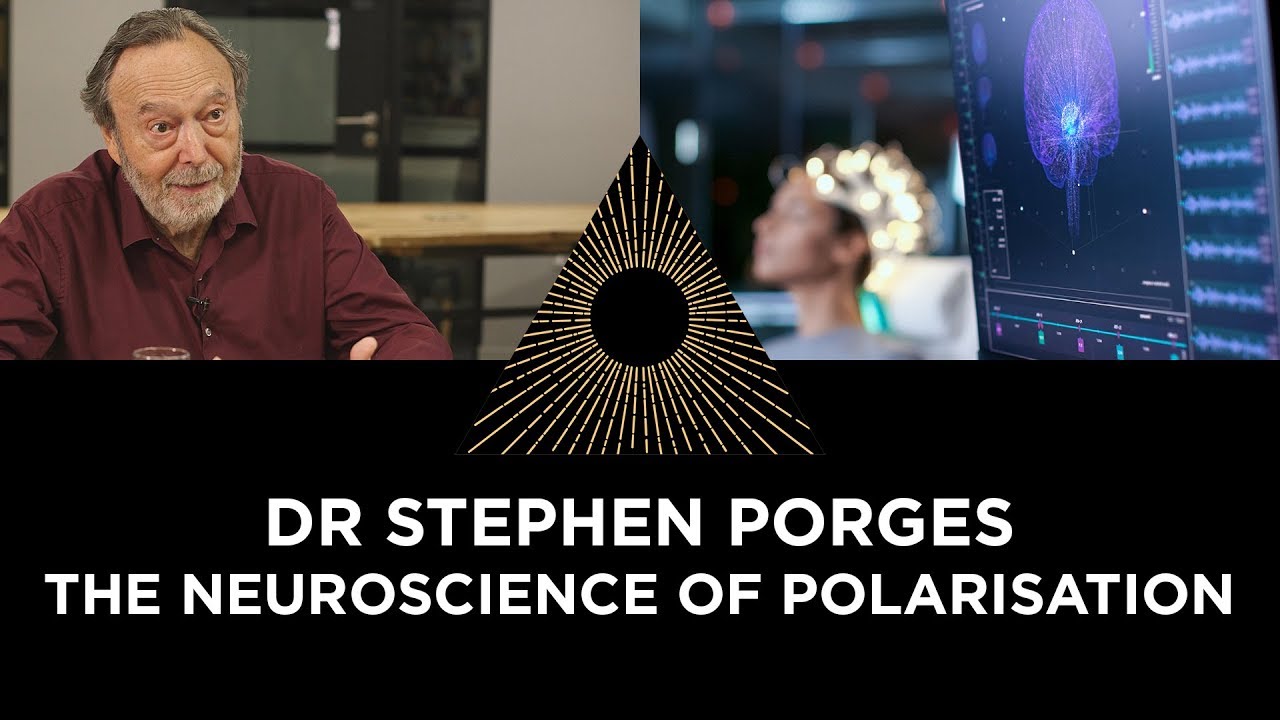
My thinking about the methodology of Clean Language is influenced by Polyvagal theory, as presented here by Stephen Porges. I believe there is also a deep connection between Clean and Permaculture. We have barely scratched the surface of the rich possibilities. I can imagine that we can draw upon all of these theories and practices.
I am trying to write poetry about these times we are living in. It is very hard. There is a lot of grief to process, as well as breath-giving beauty. We still have many birds, butterflies, bees, and many other animals where I live—I still watch, listen for their songs, and this is good.
But there used to be herds of buffalo in the millions trampling on these plains. There were wolves, and way back even giant mastodons. Fortunately, the University of Colorado has honored these great beings by naming football teams after them.
We now have computer games such as “Animal Jam” where kids can enjoy a relationship with the natural world. I am sure we will make up for the die-offs through realistic user experiences in the burgeoning, quadrillion-dollar virtual reality industry. Strap on your goggles, everybody! The world is dying. Get ready to have some fun.
And breath-giving beauty…what was beauty before breath-giving beauty?
And does breath-giving have a size or shape?
And when you are sure…how do you know that you are sure?
Meta-comment
My process, as a modeler, is to focus attention on different voices…I sense a split personality operating…and that you have an awareness of the difference in attitude of those two voices…I do not project this onto the system if I am clean…normal discourse does project onto others…know thy own projections…most people are not aware of their own projections…clean language stops this entrenched tendency.
And when it is very hard…and you want to write poetry about these times…and it is very hard…what do you want to have happen?
Please don’t feel any need to answer any of these questions…
I got a chance to view the video this morning and express great pleasure in your inventiveness and quality of shared attention. It was a good pace and evenly matched. A well played language-game. I took notes, and enjoy playing the role of a dramaturg.
I could do a doodle, sketch, drawing, model of the dialogue but that would take too much time ( alas!) away from other projects, nor do I think it necessary for the two of you. And I don’t have a scanner nor do I want to use my smart phone. I will turn off the computer soon and stay away from it for the rest of the day.
I took notes, and was curious , as I did so about my own motivations for doing so. How is my silence or my meta-comments to be of good use? I have lots of questions about the differences between observers, observer-participants, and critics. And what happens to the actor on stage, before the camera. It is always the actor who keeps the audience watching. This dramaturgy metaphor is a useful one for me.
And is there a relationship between dialogues and duets? And trio, quartets, quintets, sextets and choruses? And what happens to the soloist?
How is speech and discourse like musical occasions? Or like military ones?
So, there is a grammar to these set ups, an invisible architecture, a somatic syntax, and that is what interests me the most. But this kind of investigation is not like a conversation. And can be intrusive.
“One should never interfere with natural ignorance.” - Oscar Wilde
And is the unexamined life worth living? For some people it works okay. Our natural ignorance may be necessary for us to function at all. But when does that become a fatal flaw? When does it become unnatural?
I wonder once again how do you/we consider the audience? What determines public/private speech? And how do we write about this? More unanswered, perhaps, unanswerable questions.
Mentioning Mark, struck a chord…a very dissonant chord. And a dark, cold, demonic fury…pulling downwards…and morbid…very morbid curiosity…to tear off the scab and look at it…a bad idea!
And story…can we drop the story…examine the feelings? And come up with a better story?
Obviously, Marco and Michael, can do this kind of subtle investigation, but not everyone is able to do this…nor do they want to.
So, this is where the rubber meets the road…I hate that metaphor…such a cliche…and so unecological…I would love to be in an environment without rubber or roads…
Invisible architecture…this is where the cognitive work of images comes to be very useful but this will probably be happening to a future people, who are better at detecting these subtle cues than I am…
Thank U John for the Point of View of Audience , & one I trust feedback from.Not all audience members are as Attuned to the Play as a possible new way of ( ) encounter with life. A note of personal experience,I have learned to be open to feedback and discern that not everyone 's feedback (public or private) is necessary ,for any number of reasons of my perference. With U it’s a welcome ,refreshing experience whether I agree or not,Why : the music is in/on my Soundtrack. Peace,Care & Rattle Them Bones
I’m really enjoying listening to this conversation on love, metaphysics and poetry. It is sort of zooming in, in a Cosmosically reliable way, on things I have been wondering about lately, mostly related to love. I also about a week ago watched this very affecting movie by Ingmar Bergman, called “Summer with Monika,” that crystallized for me a certain way of thinking about what love - well, at least romantic love - means, or usually winds up meaning, between people. In that movie, a teenage couple - I think they are 18 and 19 - escape from their pretty lousy lives (pushy families, pushy bosses) and spend most of a summer on an island away from their town, sort of drinking in each other. I don’t know who did the cinematography for the film, but many of the shots of Harriett Andersson, who plays Monika, with her beau Harry (can’t recall the actor’s name) are very charged, and you can feel in a way how absolutely in love - or at least infatuated - not only the couple are with each other, but the camera with the couple (and especially Monika).
I don’t want to spoil the ending (if you want to see the film without spoilers, don’t read ahead!), but there was this fabulous decision Bergman makes, which seemed to distill the essence of the film for me, as well as encapsulate my own recent feelings about romantic love (as well as further convince me of Bergman’s greatness and mastery). What he does is, he films this very intense scene, in which Harry watches Monika undress on the island, and run towards a small body of water, and then enter the body of water. The whole movie is shot in black and white, which gives the whole scene a sort of hard-to-describe sensuous austerity. The scene is tremendously charged. And it is just beautiful, it really sears itself into the viewer’s mind and memory, or at least this viewer’s mind and memory. I understood why Harry was in love with Monika - I was in love with Monika, too - but I also knew it wouldn’t last, and of course it doesn’t. They eventually return to town - by then Monika is pregnant - get married, and actual life, or at least one form of life, begins - money problems, issues with fidelity, very intense scenes of loathing and recrimination, etc. Monika gives birth to a daughter, then abandons Harry, who is left to raise the girl. (I should cut both of them some slack - they are still very young at this point.)
Anyways, Bergman’s decision at the end is to shoot a closeup of Harry’s face - he is looking at himself in a window, I think (?), and holding their daughter - and then there is this masterful flashback to that exact scene where Monica enters the water. And it is so clear, at least the way I interpret this flashback, that Harry is still in love, but not with Monika herself, rather with his memory of being with her that summer on the island, and maybe even that particular moment with the water, at least as a symbolic summary of all of the smaller moments that led up to that moment. He is in love with a memory, but not a person - or, he is in love with an iteration of that person, but not the whole person or the later person. The movie itself is, in a way, also a process by which the viewer falls in love with Monika (at least I did - it would be interesting to hear women’s takes on the movie, as well as queer takes), and then this love, a sort of honeymoon, is shattered, and we are, like Harry, left both profoundly disillusioned and longing to return to that scene with the water, which seems to represent a sort of primal, dreamy innocence, even a womb-longing, though I’ll stop now with the Freudian business.
Yeah, I don’t know - on a personal note, I think I’m pretty disillusioned after my divorce, even though we were only married for two years. I sometimes think it’s futile, in some ways, to depend on other people. I don’t mean this in a sort of “pull yourself up by your bootstraps” nonsense. I just mean, that I used to rely on people to make me happy. And I was afraid of being alone. But I love being alone, at least when I am alone. And I am skeptical about other people having the power to make me happy, as opposed to relying on myself, my heart, for that. After Toni Morrison passed away, I was reading her Wiki page, and came across this quote, where she was talking about why her Beloved trilogy should be read together. She either said or wrote, “The conceptual connection is the search for the beloved – the part of the self that is you, and loves you, and is always there for you.” I guess I feel that the actual beloved is the daimon within, let’s say, the self behind or within the self, etc. Even when I think about my own spiritual teacher, Daaji, as well as the other teachers in the Heartfulness lineage, (and I confess I view Bloom as another spiritual teacher, and Bob Dylan, too, and also many poets), I feel that these teachers/visionaries/poets are there to just put me in touch with my own spiritual teacher, which I understand to be my own heartcompass, to put it that way, the “still small voice” from the Bible (I think the KJV). I just feel like that - being connected to the divinity within, let’s say - is actually the way we become sort of less attached, less grasping, to this world. Because we don’t listen to the world’s dictates anymore, in a way - we listen to our own heart. There is a prayer in Heartfulness, with a line at the end that goes, “we are yet but slaves to wishes, putting bar to our advancement.” I used to really struggle with this line - what does it mean? But I think it means “wishes” as something egoic, a form of grasping and attachment. I think desire is something different, a la Blake.
here’s the scene I talked about , which happens twice in the movie - once as or when it happens, and once as Harry’s flashback. I just watched it again and realized there is no dialogue, which makes total sense - it is really a primal scene, almost like a dream (and I forgot that Harry seems to be sleeping and then wakes up to see Monika); words aren’t necessary there.
Last night, I had a series of dismal dream scenes, where I was making drawings and texts and trying to figure out something, and I was involved in a rehearsal but my heart was not in it. Then, the leader of this group, James L., an esteemed teacher of mine, points a finger at me, and says," Now, John, who is a gay man, can give us his opinion." I felt totally uninterested in doing that and looked for an exit from this depressing dreamscape.
As you are hyper aware , Andrew, of your identification with the erotic gaze of Harry, and assuming that the director intended for the audience, both males and females, to respond to this scene in a certain, prescribed way, this is for me, a strong hetero sexist male move to make. Note, I do not say homophobic. As you love Walt Whitman, I can sense that you are open to the homoerotic undercurrents as well. In the bathers scene, a woman gazes upon a group of male bathers, erotically charged. Who is zooming who? We can slip into multiple erotically charged sensoriums, especially when we are gazing up at figures on a big screen. Many straight men and women, respond to gay male porn, favorably. This shocks me. Of course, most would consider this taboo.
What is possible, now, that has never been possible before?
Taking this scene out of context, after I heard your description, has robbed me of a fresh view of the scene. I am not familiar with this film I am already hyper-aware of your response, and your personal associations, which I have no interest in interfering with. These are your response and you articulate this well. And they make perfect, conventional sense. I would not say universal, nor do you insist on a monological reading of the film.
My response to your response, is not necessarily a queer response. I am not representing anyone in these remarks other than my own.
I do find this scene is shot from the man’s angle. We watch him, watch her. She strips naked. He is on the ground, in her shadow, looking up at her, she puts his hand upon her shoulder and let’s him touch her, then she walks over him, showing him her snatch, and dives into a pool. All of these gestures, create an effect. And her attention is about keeping him attentive, while she is having an affair with sun, wind, water. She is an earth goddess, great mother figure. And he is a lad, fully clothed, lost in a dream.
I get no charge from this, as you do, Andrew, but I am in love with Bergman’s mastery of the ensemble, of light and dark, and of the art house experience, of going up to the Thalia Cinema/Cafe, on the upper west side, and taking my french girl friend, Claire, whom I stole from my bisexual boy friend, Charles, for an afternoon, to see Hour of the Wolf and Persona.
This menage between us three was an experiment, and a kind of queer menage. And like the great movie star, Jean Moureau, Claire, could be moody and smoked way too much. I loved Claire, but I was not in love with her, I was in love with Charles and I wanted to disrupt his bragging about her by stealing her away from him. And I did.
She got a raw deal I am afraid as she realized what I was up to. She had stolen him from me, I had stolen her from him, and Charles, to my surprise, was grateful to be free of both of us. He was relieved. She was more than he could handle and he expressed admiration for me, an admiration that he had never felt for me when he perceived me as a gay man only. Charles and Clair-all lovers young, all lovers must, as chimney sweepers, come to dust.
Jules and Jim is another great black and white film, that is about this male bonding energy, around a mysterious woman . All of these films, trigger one another, and get into the structures of our desire.
I will always remember the feeling of walking up Broadway with Claire, and entering a restaurant, and having strangers gaze at us, ‘as if’ we were a beautiful couple. I pulled the chair out for her, kissed her shoulder. I played the hetero male. And I was approved of. I was the object of a hetero gaze amplified. I had never, not once, experienced that with a boy friend. My boyfriends and I, when we were in public, were treated as scum, were often attacked, physically, spit on, pelted with garbage, refused service ( this happened once, in a Jewish deli, when I was with a black man).
When I was with Claire, I was swept up in her glamor, and the the envy of straight guys that came towards me. I loved, not Claire, for her own sake, but for the freedom, briefly, from stigma.
So, it is with these associations, that I re-enter the art house movie world of Bergman, and this scene, resonates with so many others.
I am not attempting to be rigorous, here, but to float in an ocean of love, in a luminous black and white, as Bergman does, as Monika does, as Harry does.
And if I come with baggage to this film clip, I would suggest that you do, too. Of course, no one is a hetero, homo, bisexual, etc, as everyone is more fluid than that and we are always much, much more than our erotic charges, which come and go…like women talking of Michelangelo…
Thanks for bringing attention to the Bergman. It is nice to know that others are still able to resonate with this black and white enchantment.
Read this article this morning by Zadie Smith and thought of what you wrote yesterday, how
Smith does a great job balancing her own views with incisive and compassionate characterizations of what she is arguing against. Worth a read, I think at least.