I’m not sure, Ewere, whether we agree or disagree. And it is okay as we may be in a holding pattern, that may split, divide, polarize, re-form and make sense briefly until the next wave of possibilites attracts attention. Probabilites, maybe. Predictabilites, very unlikely.
.I do not assume that I understand what you mean by personality (a noun) or what you mean by over ( a preposition). These are categories that may shift as we move from speech to writing. These two ways of organizing communication( analogue/digital) are not evenly distributed amongst us. I have to refer to dictionaries as I get older as I can no longer assume that others are using words the way I do. Words nor concepts sit still.
" I " without Other makes no sense to me and this is when I lose Hofstader’s signal as his way of identifying pattern is different from my own . If I am in a dream then there are others I communicate with. I have rarely had a dream in which I was alone although there is a great deal in a dream that is invisible. If I am in a waking state there are others I communicate with ( even when I am alone.) I can dance in the dark. Touch gives me much more grounding than sight or sound. I have never made love to anyone objectively. I have heard much about the male gaze but I find this perhaps a hetero cultural norm. Men with men are very attuned somatically and share silently across great hazards. We learned to read minds and gestures, tones, nods. The purpose of sex was never driven by pleasure. Coming out in my youth was a life/death struggle. If I made a mistake I ended up dead in a ditch. For many this is still true.
Because men with men share lots more testosterone we understand each other too well. Men with women are often complaining about miscommunications. As a therapist I noticed how different orientations bring forth different cultural worlds. It is not what you say but how you say it and also what you never say. Men with men have high sexual rapport but may experience other kinds of disconnects than hetero couples do. I have also worked with trans and lesbians with different kinds of attractors and resistances.
That is perhaps why when you say you have a representation of the other I feel kind of weird. I have no clear cut representations in my brain of the other. I have a sense of the touch of the other even at a distance and before anyone speaks. And after touch, the touch lives on, in the scent, in the breeze. This otherness is not to be compressed in a zip file and decoded by my brain . The search for an ultimate algorithm is alien to me.
And we can touch with our minds by developing certain ways of tuning into our sensoriums . We have more than five senses. Turing thought that the evidence for telepathy was pretty solid which would make a lot of current AI theory about consciousness as epihenomena quite bogus. At least incomplete.
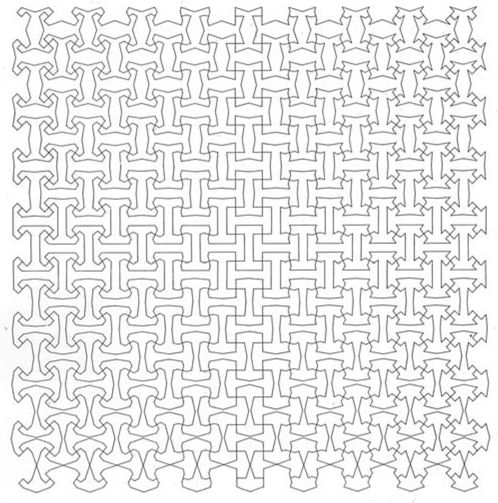
Relationships with others who have loved me keeps me aware of an " I" as important to sustain those relationships. Without those relationships and the love there would be no self reflexive movement and no forward or backward or up or down. Relational ciruits such as I tried to diagram ( I don’t use power point and prefer old fashioned drawing on paper with a crayon as it catches original gesture which power point can’t) and I appreciate that I may appear vague. I appreciate the vague, the uncontained, the not quite here, yet. Subject and Object are not clear cut for me. Where do you make the cut? Who makes the cut? Over reliance on the use of the Internet can stunt our social intelligence as it skews our senses. There is plenty of evidence for this.
And why is the “I” always capitalized? And why is “you” never capitalized? I consider myself a consortium of intelligences. “i” as Other. “i” under, above, below, within, around, the Other.
What happens if “You” is capitalized and the " I " becomes “i”. Maybe one need not be" over" the other but with each other, side by side, facing an horizon. Or “i” could be under " You". This would be to operate withn a terrestrial biosemiotics for the " You" could become a lion, elephant, bird, amoeba. And having said that I also recognize the uncontained firstness that the artist, Virginia Woolf, sometimes finds herself alone with. Plotinus said something similar. Both of these brilliant persons seem to have found no containment in human relationships. Plotinus loathed the body and his was a journey of the alone to the Alone. Woolf drowned herself.
" We do not know our own souls, or the souls of others. Human beings do not go hand in hand the whole stretch of the way. There is a virgin forest in each; a snow field where in the bird’s feet is unknown. Here we go alone, and like it better so. Always to have sympathy, always to be accompanied, always to be understood would be intolerable."-Virginia Woolf, On Being Ill.