Yet another proof of how bad I am in exercising irony!! 
5 Likes


Nope! Proff that I am not the best irony dectector! 
2 Likes
" The archaic structure might be thought of as the silent pulse before breath." Jean Gebser
As a writing, dreaming, English speaking, gay, New Yorker humanoid, what happens next?
I wander with Wordsworth lonely as a cloud…
While I wander, along the Hudson River, on a summer day, where Walt cruised handsome sailors, and Herman felt the urge to escape land and join an ill fated voyage on a whaling ship…
I re-concieve so many dreaming, observing systems, that are confronted by undecidable phenomena, triangles, cubes, spheres, zooming in the sky…
And then what happens when you re-conceive? A meta-prose poem wants to happen.
And can that happen?
No…
And where does that no come from?
I feel lost in a field of all possibility. I want to watch the clouds, fall asleep in the grass, float in 360 degree surrounding…with no need to protect inside/outside…relaxing boundaries…allowing shapes and tongues to happen…kundalini tongues licking the nape of my neck…and like the sky minded, disembodied poet tricksters who loved to brawl and drink too much and wake up in a strange bedroom…
And from the different differences of the language-games offered here, language games emerging from persons with a resonant voice box in the throat,
words/sounds coming through head, heart, gut, into hands that enter the network by typing upon a key board, and each speaker/writer trying to find a way home,
I would say,
Fear no evil...
3 Likes
Here is a poem reflecting on a visit to Goethe’s home, preserved in Weimar, delicately constructed from the point of view of both a tourist and keen observer of landscapes in memory. I came across this serendipitously in a volume titled Trace Elements, by Barbara Jordan, a poet recommended to me by Brian George. They know each other and are friends.
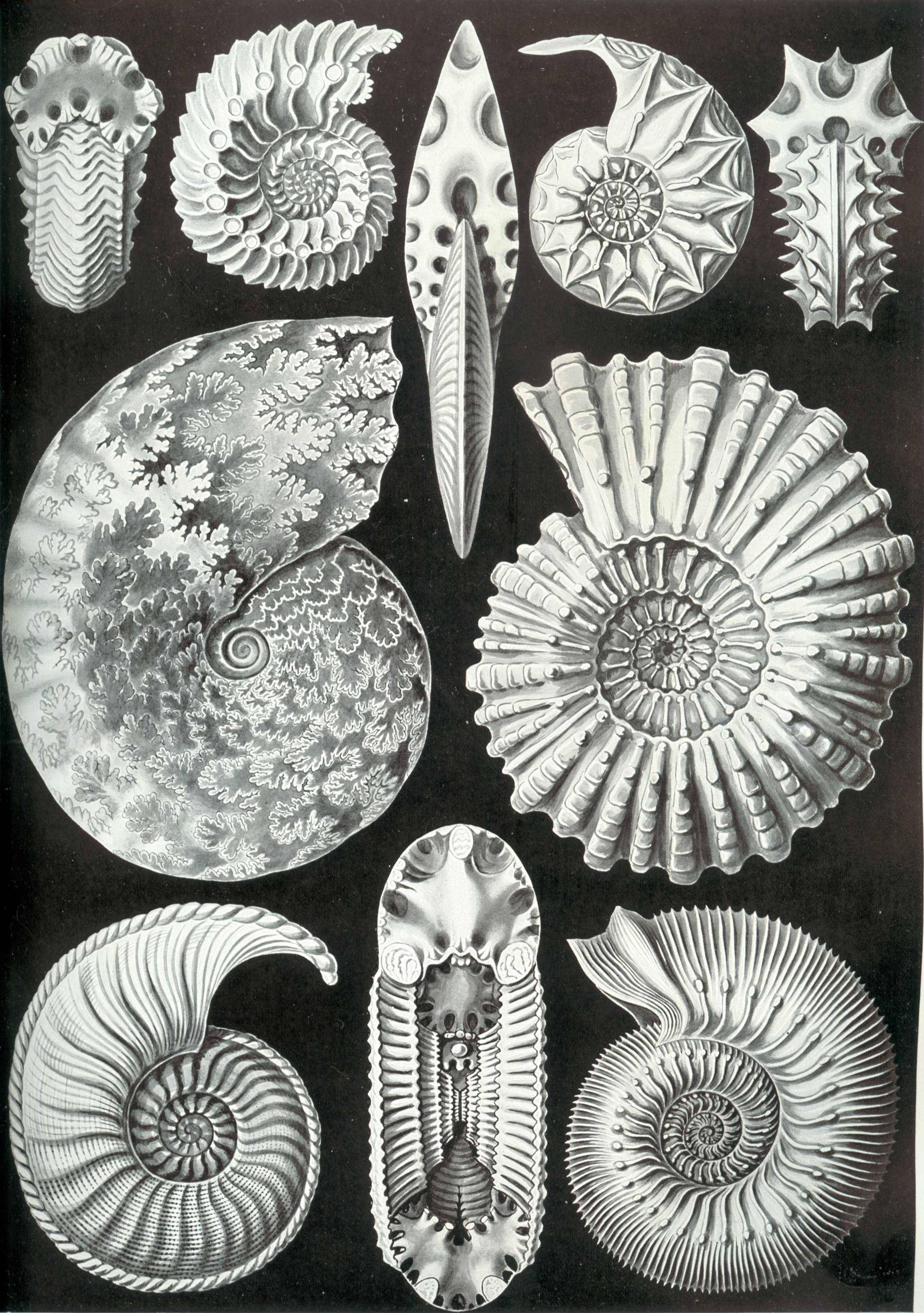
I believe the poem explores how memory works in nature and the mind, inquiring into what it means to move between different strata of time—where the fossilized shapes of things are preserved—as an observer in motion.
As the poet was attracted enough by Goethe’s relics to spend time visiting, even collecting mementos which she later regards curiously, I wonder how her way of seeing—her poetic organ of perception—corresponds to his own. Aren’t some forms of reading a means of reanimating fossil-shapes of the mind?
3 Likes
This is such an excellent poem! Thank you for posting it. I am crazy about ammonites and all the fantastical creatures hinted at in the fossil forms above. Especially the spirals, which have always and in whatever form, fascinated me. More to say, enough for now!
2 Likes


Synchronously, I’ve been listening to this wonderful talk about reading/symbolism the psyche and nature, and so much more.
2 Likes