Let’s have a Cafe Marco to Engage The Dance Around The Sun?!?
This seems to Be Marcos Social Dreaming Inhabiting Expression?!?


Ever- Present Origin….The Beautiful, Good,& True….or

Let’s have a Cafe Marco to Engage The Dance Around The Sun?!?
This seems to Be Marcos Social Dreaming Inhabiting Expression?!?
Ever- Present Origin….The Beautiful, Good,& True….or
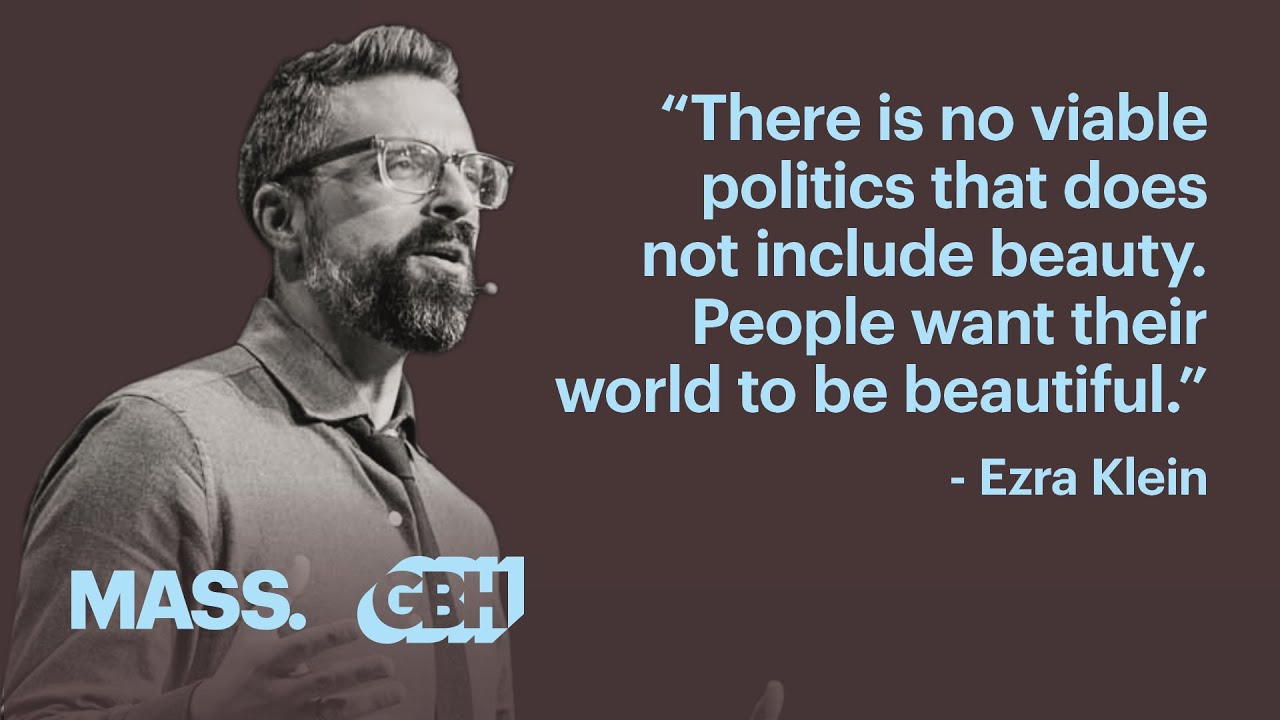
I’d be happy to participate in a conversation about Ezra Klein’s “Abundance”. Better yet, a broader exploration of the pain points he is exploring options for healing in US Society. Thanks for the link, and the focus on beauty. Yes! “If I can’t dance, it’s not my revolution!” Emma Goldman
This is a Skill fullness Very Necessary for all the levels of Engagement Here Now!!!
Here’s a poem I came across that seems to has a Beauty of Honesty ,Clarity , and
Words are Actions like Actions are Words ?!?
Children of Our Era
by Wislawa Szymborska
English version by Joanna Trzeciak
Original Language Polish
We are children of our era;
our era is political.
All affairs, day and night,
yours, ours, theirs,
are political affairs.
Like it or not,
your genes have a political past,
your skin a political cast,
your eyes a political aspect.
What you say has a resonance;
what you are silent about is telling.
Either way, it’s political.
Even when you head for the hills
you’re taking political steps
on political ground.
Even apolitical poems are political,
and above us shines the moon,
by now no longer lunar.
To be or not to be, that is the question.
Question? What question? Dear, here’s a suggestion:
a political question.
You don’t even have to be a human being
to gain political significance.
Crude oil will do,
or concentrated feed, or any raw material.
Or even a conference table whose shape
was disputed for months:
should we negotiate life and death
at a round table or a square one?
Meanwhile people were dying,
animals perishing,
houses burning,
and fields growing wild,
just as in times most remote
and less political.
What 's the Felt-Sense of these words?
And there’s that Pesky Organ Encased in Bone ….
“Digital shamanism is not just a trend; it’s a movement towards a more connected and conscious digital community,” remarks Dr. Jane Smith, a leading researcher in digital cultures.
From live-streamed meditation sessions to community healing events hosted on platforms like Instagram and TikTok, these modern-day shamans are making spiritual guidance accessible to anyone with an internet connection. And it’s not just about spirituality — it’s about creating a supportive, uplifting online environment that fosters real-world benefits.
These digital shamans harness the power of social media to build inclusive communities. You might find a group dedicated to mindfulness practices, where people from different walks of life come together to share their experiences and support each other’s journeys. The blend of ancient wisdom and modern technology creates a rich tapestry of learning and healing.
Beyond guided meditations and healing sessions, these influencers also provide a wealth of resources. Think downloadable guides, self-help workshops, and interactive Q&A sessions. By doing so, they bridge the gap between traditional knowledge and contemporary needs. This approach not only makes spiritual growth more attainable but also democratizes access to tools and techniques that were once reserved for the few.
One of the most profound impacts of digital shamanism is the sense of connection it fosters. Through hashtags, direct messages, and community events, you can engage with like-minded individuals, creating a support network that transcends physical geography. This virtual kinship can be particularly empowering for those who may feel isolated in their offline lives.
Moreover, these modern shamans often address pressing societal issues, integrating social activism into their spiritual practices. Whether it’s promoting mental health awareness, advocating for environmental sustainability, or supporting social justice movements, their efforts contribute to broader positive change.
As you explore these online sanctuaries, you’ll likely find that the blend of ancient traditions and modern platforms offers a unique and powerful path toward personal and collective growth. In this digital age, shamanism isn’t just surviving — it’s thriving, and opening doors for positive transformation accessible from the comfort of your own home.

Adontai explores spirituality, technology, and social justice through yoga and ancient wisdom, inspiring healing and human dignity daily.
Let’s Gather Together to Engage in Infinite Conversations around the Campfire of Our Inner & Outer
Electric \Electronic Bodies?!? Seems to Be a Possible Working Metaphor for Infinite
Conversations….What else is Conversation ….Reality Interaction within what is Real Inside of Each
Unique Human ?!?
Hi @Michael_Stumpf, how about we schedule a Café to explore these intertwingling topics? (I’m busy until mid-March, so maybe the week of the 16th?)
Ezra Klein asks some good questions and offers a somewhat plausible (obviously partial, still pretty weak, I think) diagnosis of what got us into the political situation we are in. I think there are strong counter-examples to his argument. For example, I thought the Obamas had a sense of beauty and style. (Not talking about policies or actions here.) But there is also a meaning crisis among liberals in the absence of a strong mythical framework. The myth of perpetual technological and economic progress, without spiritual fulfillment or social purpose, is underlying the void that maga has stepped into.
At the same time, I don’t think Klein goes nearly deep enough, as if there were just some simple corrections we could make (such as cultivating a sense of taste) and suddenly market liberalism would be a stable system that works just fine. (I’m sure he would have said more with more time, so that’s not a totally fair critique.) Either way, I think it would be interesting to discuss these questions in the light of other recent posts, such as this one from @care_save:
I am up for some Communal Wave
Surfing around Tending the
In- Between …Sharing of the
Creative Chaos we find ourselves
In Dreaming While Awake…
The week of the 16th is Good
for me…let me know the date that
Lands well for U…
Something from Diane Musho Hamilton, that I find useful for
engagement in The Art of Conversation;
Beginnner’s mind interrupts this reflex.
One of the most quietly radical teachings in Zen is the idea of beginner’s mind — what the Japanese tradition calls shoshin. It does not suggest ignorance or lack of experience. Rather, it points to a quality of attention that remains open, curious, and unguarded, even in familiar territory.
Most of us live inside accumulated conclusions. We assume we know who a person is because of what they did yesterday. We predict how a conversation will unfold because of how similar conversations have gone before. Our history rushes in to interpret the present before the present has fully arrived. In doing so, we mistake recognition for understanding.
Beginner’s mind interrupts this reflex.
It invites us to meet each moment without the burden of certainty. Not to erase experience, but to hold it lightly. To listen before deciding. To observe before defending. To feel what is actually happening in the body before constructing a narrative about it.
There is a physiological dimension to this as well. When we assume we already know, the nervous system tightens. Perception narrows. We respond from memory rather than immediacy. But when we soften our grip on certainty, the body relaxes. Curiosity becomes possible. The mind widens enough to perceive nuance.
In relationships, this shift can be transformative. The person in front of us is no longer reduced to a role or a past mistake. The moment is no longer confined to our expectations. Something new can emerge — not because circumstances have changed dramatically, but because our posture toward them has.
Zen does not ask us to discard knowledge. It asks us to refrain from clinging to it. Beginner’s mind is not about pretending we don’t know. It is about remaining willing to discover.
Each encounter, each breath, each exchange carries more potential than our habits allow us to see. When we approach life as if it is still unfolding — because it is — we make space for insight, for connection, and for genuine responsiveness.
Beginner’s mind is less a technique than a stance. A quiet willingness to admit that this moment may be richer, more complex, and more alive than our assumptions suggest.
And in that openness, practice renews itself.
Plus what Eggs do we want to Crack Open within our Electric Body?!?!
“The most dangerous psychological mistake is the projection of the shadow on to others; this is the root of almost all conflicts. Knowing your own darkness is the best method for dealing with the darknesses of other people. No tree, it is said, can grow to heaven unless its roots reach down to hell. The most terrifying thing is to accept oneself completely. One does not become enlightened by imagining figures of light, but by making the darkness conscious." ~Carl Jung
Image: “The Tree of Life” (1922) from Carl Jung’s The Red Book.


