


Does any - Body K- now what Time is it???
1 Like
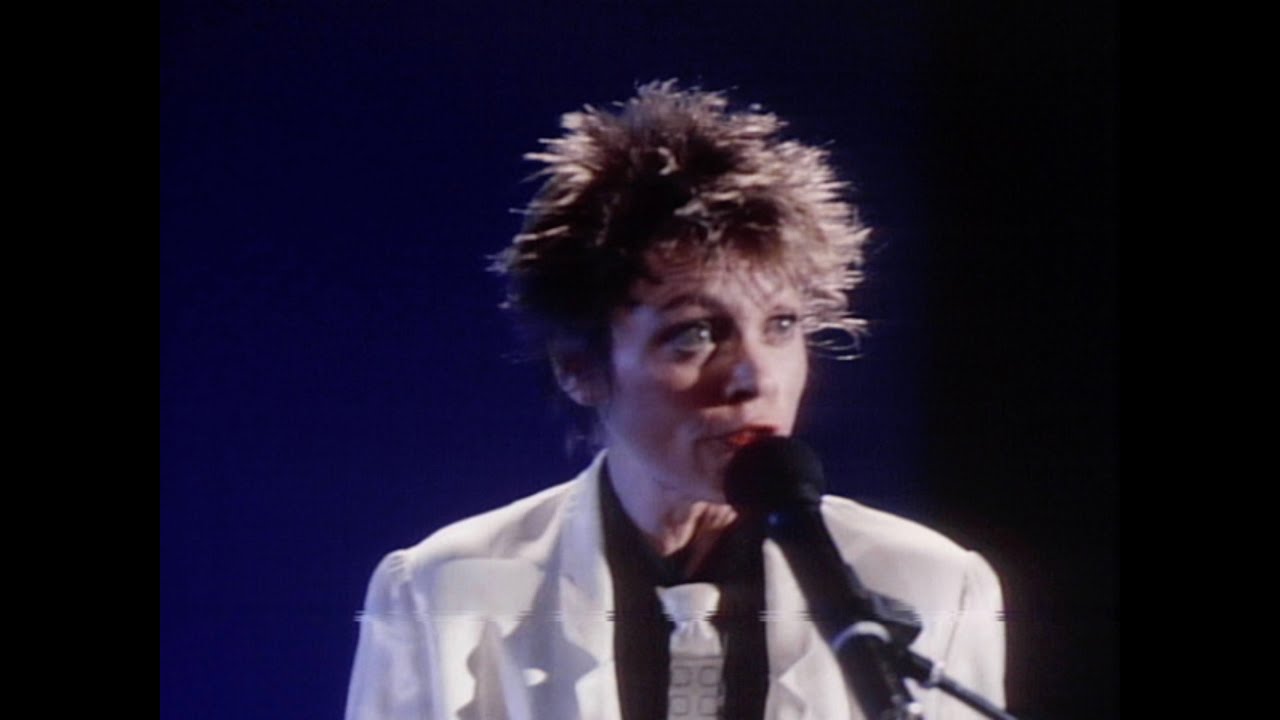
Lyrics
]("Laurie Anderson Language Is a Virus" Lyrics - Search)
Paradise
Is exactly like
Where you are right now
Only much much
Better.
I saw this guy on the train
And he seemed to have gotten stuck
In one of those abstract trances.
And he was going: "Ugh . . . Ugh . . . Ugh . . . "
And Fred said:
l think he’s in some kind of pain.I think it’s a pain cry.
And I said: “Pain cry?
Then language is a virus.”
Language! It’s a virus!
Language! It’s a virus!
Well I was talking to a friend
And I was saying:
I wanted you.
And I was looking for yov.
But I couldn’t find you. I couldn’t find you.
And he said: Hey!
Are you talking to me?
Or are you just practicing
For one of those performances of yours?
Huh?
Language! It’s a virus!
Language! It’s a virus!
He said: I had to write that letter to your mother
And I had to tell the judge that it was you.
And I had to sell the car and go to Florida.
Becaure that’s just my way of saying (It’s a charm.)
That I love you. And I (It’s a job.)
Had to call you at the crack of dawn (Why?)
And list the times that I’ve been wrong.
Cause that’s just my way of saying
That I’m sorry. (It’s a job.)
Language! It’s a virus!
Language! It’s a virus!
Paradise
Is exactly like
Where you are right now
Only much much (It’s a shipwreck
)
Better. (It’s a job.)
You know? I don’t believe there’s such
o thing as TV. I mean -
They just keep showing you
The same pictures over ond over.
And when they talk they just make sounds
That more or less synch up
With their lips.
That’s what I think!
Language! It’s a virus!
Language! It’s a virus!
Language! It’s a virus!
Well I dreamed there was an island
That rose up from the sea.
And everybody on the island
Was somebody from TV.
And there was a beautiful view
But nobody could see.
Cause everybody on the island
Was saying: Look ot me! Look at me!
Look at me! Look at me!
Because they all lived on an island
That rose up from the sea
And everybody on the island
Was somebody from TV.
And there was a beautiful view
But nobody could see.
Cause everybody on the island
Was screaming: Look at me! Look at me! Look at me!
Look at me! Look at me! Why?
Paradise
Is exactly like
Where you are right now
Only much much
Better.
Songwriters: Laurie Anderson
For non-commercial use only.


When One Isn’t Enough- The Lives of Metaphorical Fluid People


Life is not a puzzle,it’s a Wave, and you were never meant to carry the Wave,
you were meant let move through You…to teach You to B Alive! Alan Watts



This article seems to tie with the very Infinite Cafe’ I listened too and
Decided to stay with over the pass eight years & became a threshold
in my Growing into a more Open,Curious & Less contracted Human, Being
Human!
The Minor Gesture, by Erin Manning – Meeting #3 - Chapter 2 (Artfulness - Emergent Collectivities and Processes of Individuation)
Some seeds grow with Careful Attention , Steadfastness & Serious Play…

1 Like
This is a Topic\s With “Little, Big “ Vibes Flowing in the Air & on ,
the Ground of Planet Earth(Flip it - Heart)?!?

Marshall McLuhan was the greatest prophet of the digital age. In the 1960s, McLuhan, a Canadian literary theorist reared on Elizabethan satire and the labyrinthine novels of James Joyce, turned his attention toward the budding and befuddling electronic age. Like most prophets, McLuhan became one through a fascination with God. Prophets divine their wisdom from a source, and Digital Communion shows that McLuhan’s was his own Catholic faith. In other words, the greatest prophet of the digital age was an ardent Christian. A reconsideration of his vision can change the way we view the online world.
A Catholic convert, McLuhan foretold a digital age full of blessings and sins: a world where information was a phone call or keystroke away, but where our new global village could also bring out the worst in us.For him, mass media was a form of Mass. McLuhan thought that while the print world was visual, the electric world–especially television–(was a medium of touch.) It enveloped us. For McLuhan, God was everywhere, including in the electric light.
Digital Communion considers the religious history of mass communication, from the Gutenberg Bible to James Joyce’s literary forerunners of hypertextual language to McLuhan’s vision of the electronic world as a place of potential spiritual exchange, in order to reveal how we can cultivate a more spiritual vision of the internet–a vision we need now more than ever.


Listening\Speech Polarity and how \why as Relates to Freedom of Speech,
Internally \ Externally Polarity it Seems?
1 Like


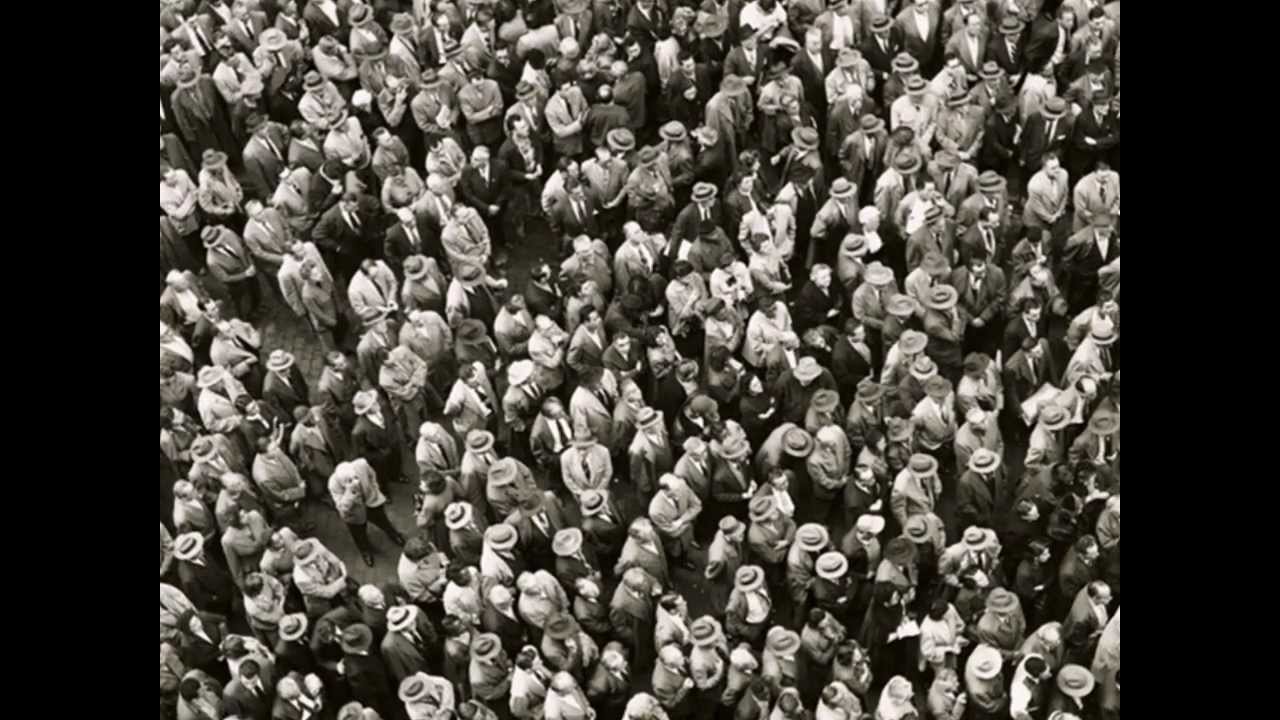
Point of View, Frame of Reference, and Perspective
The concepts of point of view, frame of reference, and perspective are interconnected in the way they influence how we perceive and interpret experiences. Each of these terms serves as a lens through which we understand the world around us.
-
Point of View: Refers to the subjective perspective of an individual or group, shaped by personal experiences, beliefs, and values. It affects how we interpret facts and events, often leading to biased interpretations.
-
Frame of Reference: Represents the broader context in which a situation is viewed, including cultural, social, and psychological factors. It helps us understand the significance of events and decisions from different angles.
-
Perspective: A broader term that encompasses the various ways in which we can view and understand the world. It can be a point of view, a frame of reference, or a combination of both, depending on the context.


2 Likes

Quantum research shows that matter at its smallest scales does not behave like solid particles. Instead, everything arises from vibrating patterns of energy known as toroidal fields. These fields loop energy in and out, forming stable structures that create the appearance of physical matter. Even the human body is thought to function as a flowing, dynamic toroidal system shaped by continuous energy movement.
These energetic patterns help explain why matter seems stable while remaining fundamentally active and constantly shifting. Atoms, air, and everyday objects are composed of organized energy structures that interact in subtle ways. When viewed through this perspective, the world around us becomes a network of interconnected fields rather than isolated pieces of solid material.
Because the body is also an energetic field, it is continually influenced by and connected to the environment. Thoughts, emotions, and intention may play a role in shaping how energy flows within this field. This idea supports the view that the universe operates through resonance and interaction and that all forms of existence are linked through shared energetic patterns.
2 Likes
This reminds me of one of this site’s great all-time threads:
Have we come full circle? 
1 Like


Then there’s the Sprinkles of Kindness,Tenderness, Laughter & Peace ….
Then there’s the ART of ….

We All have Light with Shades of Dark Light Dancing in Our Souls!!!
1 Like
I’ll have some of that on my Bavarian Cream 
1 Like


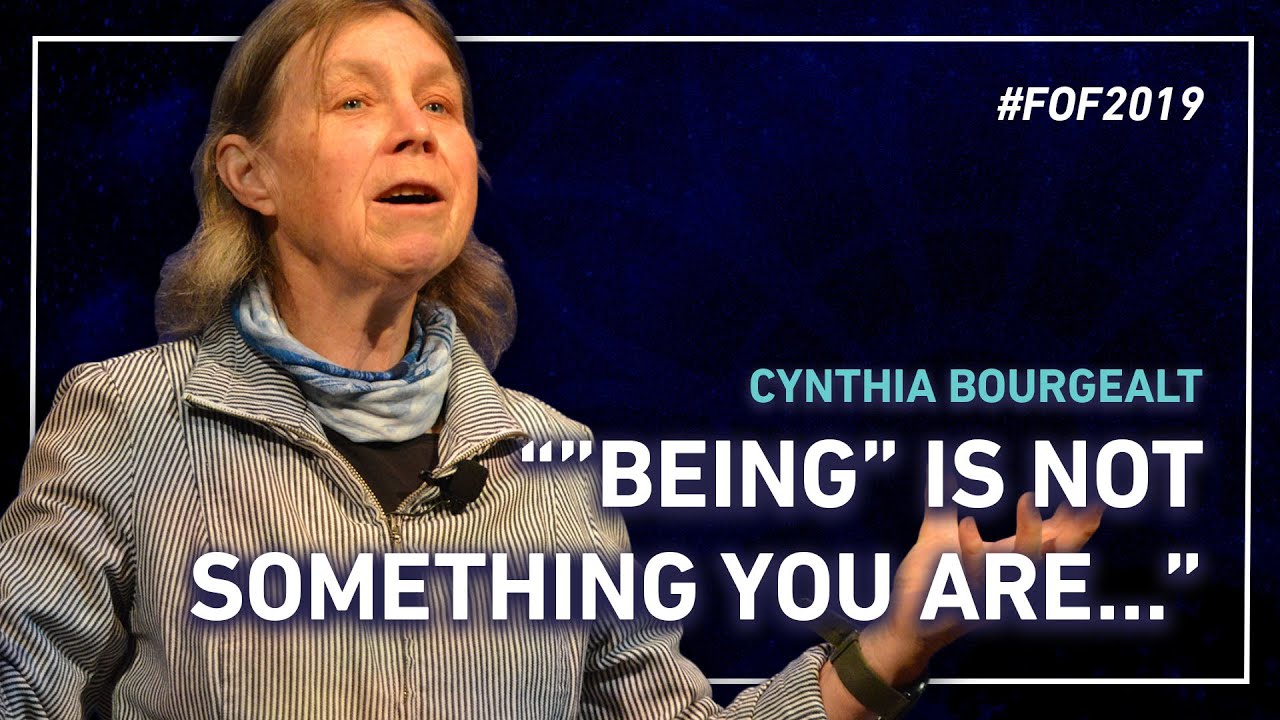
No Wonder , we are relearning\unlearning to Use a Wider,Deeper ,Openness to What is Real?
In\With A Cubic Centimeter Reality at the Edge of our Comfortable Hobbit House !?!

A Reflection this Ending \ Beginning Moment as The Earth Makes another Adventure…
Around the Sun with 7-8 Billion Human Freaking Out!!!
A Open Question?
The phrase “adult children in terms of Great Mystery of Being Alive & a Witness” is a philosophical and poetic statement rather than a factual query that can be answered with a definitive “yes” or “no”. It touches upon profound themes that are open to various interpretations.
One common interpretation of being an “adult child” in this context suggests that despite our chronological age and accumulation of knowledge, humans often retain a child-like sense of wonder, vulnerability, and lack of complete understanding in the face of the vast, intricate “Great Mystery” of existence [1]. This perspective implies:
-
Awe and Wonder: Like children, we are constantly encountering new aspects of life that evoke a sense of awe and sometimes incomprehension.
-
Vulnerability: Our awareness of the complex and often uncontrollable nature of life highlights a fundamental vulnerability, much like the dependence of a child.
-
A Continuous State of Learning: It positions us as perpetual students of the universe, always growing but never fully mastering the “mystery” of life.
The term “a Witness” in this framing suggests a role of passive or active observation of existence [1]. We are conscious beings experiencing and reflecting upon the world around us, a perspective fundamental to many philosophical and spiritual traditions which emphasize mindful observation.
Therefore, many people would agree with the sentiment that we are all, to some extent, “adult children” in the face of life’s deepest mysteries, perpetually growing and observing but never fully grasping the totality of being alive.


Humor,Lighten the load U carry, Open
without absorbing, being agile in Mind,Heart & Body & as Bruce Lee said “Be Like Water”!!! or Air ….U can learn
to Float ?!? MAYBE …U still have your
INTENTION to MOVE

It’s Initiation… Tending the In Between…!!


Something is happening in the United States right now that isn’t showing up in the headlines.
It isn’t about politics.
It isn’t about parties.
It isn’t about personalities.
It’s happening in the nervous system of the nation.
In the way people are pulling inward.
In the way trust is dissolving.
In the way old identities are quietly falling apart.
This is not a breakdown.
It’s an initiation.
There is a story being told about this country right now.
It is loud.
It is theatrical.
It is engineered to keep nervous systems hooked into fear, outrage and endless distraction.
But that story is not the real one.
Beneath the headlines, beneath the politics, beneath the manufactured conflicts, a very different process is unfolding in the collective body of the United States.
This is a reading of that deeper field.
Not as opinion.
Not as ideology.
Not as prediction.
•The National Nervous System Is Exhausted
The dominant frequency in the American field right now is not anger.
It is fatigue.
A bone-deep, cellular exhaustion.
People are tired of being alert.
Tired of being manipulated.
Tired of being told what to think.
Tired of being pulled from crisis to crisis.
The collective nervous system has been in fight-or-flight for decades.
9/11.
Wars.
Economic shocks.
Pandemics.
Cultural wars.
Digital saturation.
There has been no real integration period.
No collective exhale.
So the body of the nation is showing classic trauma patterns:
• Emotional numbing
• Hyper-reactivity
• Dissociation
• Withdrawal
• Cynicism
• Apathy disguised as “not caring”
This is not weakness.
It is what happens when a system has been overstimulated for too long.
•A Fractured Identity: “Who Are We Now?”
America is in an identity crisis.
The old story—exceptionalism, certainty, moral authority, endless growth—no longer holds.
But no coherent new story has taken its place.
So the field is split.
Some are clinging desperately to the past.
Some are trying to dismantle everything.
Some are quietly disengaging.
Some are rebuilding internally.
There is no shared mirror anymore.
This creates:
• Polarization
• Projection
• Tribalism
• Moral inflation
• Enemy-making
When identity collapses, people look for something—or someone—to blame.
•Unprocessed Grief Is Everywhere
One of the most suppressed frequencies in the American field is grief.
Millions of losses have never been metabolized:
• Lives
• Livelihoods
• Relationships
• Health
• Trust
• Stability
• Futures that never arrived
There was no ritual.
No pause.
No collective mourning.
So the grief went underground.
And underground grief becomes:
• Rage
• Depression
• Addiction
• Numbness
• Compulsion
• Escapism
You see it in the rise of substances, screens, gambling, porn, shopping, constant scrolling.
These are not “moral failures.”
They are coping mechanisms for unresolved loss.
•Control Structures Are Losing Coherence
On the surface, institutions still appear powerful.
But in the subtle field, something else is happening.
They are hollowing out.
People no longer trust:
• Media
• Government
• Corporations
• Medicine
• Education
• Religion
Not because they are “anti” everything.
Because too many contradictions have accumulated.
Too many lies.
Too many reversals.
Too many exposed incentives.
So faith in centralized authority is collapsing.
Quietly.
Individually.
Privately.
This is why you see people turning inward, decentralizing, building parallel systems, learning skills, forming micro-communities.
It’s not rebellion.
It’s instinct.
•Two Timelines Are Running Simultaneously
The United States is now operating on two energetic tracks.
Timeline One: Spectacle Consciousness
• Addicted to outrage
• Hooked into identity wars
• Consumes endless media
• Feels constantly threatened
• Lives in reaction
Timeline Two: Embodied Sovereignty
• Withdraws from noise
• Strengthens inner authority
• Builds resilience quietly
• Seeks coherence over drama
• Lives from discernment
These timelines are diverging.
They occupy the same geography.
But not the same reality.
This is why people feel like they’re living in different worlds.
They are.
•A Quiet Awakening Is Underway
Contrary to appearances, this is not a “dark age.”
It is a composting phase.
Beneath the collapse narratives, millions are:
• Questioning narratives
• Healing trauma
• Reclaiming intuition
• Leaving abusive systems
• Redefining success
• Choosing depth over status
This is happening without hashtags.
Without movements.
Without leaders.
It’s cellular.
And that makes it powerful.
•The Field Is Calling for Integration, Not Revolution
The next phase is not chaos.
It is integration.
The American psyche is being asked to:
• Reconcile shadow
• Admit mistakes
• Release superiority
• Mature emotionally
• Learn humility
• Develop wisdom
This is initiation.
Not punishment.
Nations, like people, must outgrow adolescence.
•What This Means for You
If you are feeling:
• Pulled inward
• Less interested in noise
• More protective of your energy
• More selective
• More grounded
• Less reactive
You are not “checking out.”
You are checking in.
You are aligning with the emerging field.
You are becoming a stabilizing node.
These are the people who carry societies through transitions.
Not by shouting.
By holding coherence.
 Final Transmission
The United States is not “falling apart.”
It is shedding an outdated identity.
Painfully.
Messily.
Imperfectly.
But purposefully.
What comes next will not be built by institutions.
It will be built by regulated nervous systems.
Clear minds.
Rooted hearts.
Sovereign spirits.
If you are doing that work in yourself—
You are doing it for the whole.
•Connie Anderson,
This by David Whyte seems to be Intermingling with the above?
1 Like

https://aeon.co/essays/lucien-levy-bruhl-and-the-emergence-of-personhood
To be is to participate
Lucien Lévy-Bruhl’s Concept of Personhood
Overview
Lucien Lévy-Bruhl, a French philosopher and anthropologist, proposed that personhood is not an individualistic achievement but a lifelong process of living with others. His ideas challenge the notion that personhood is solely based on individualistic and logical reasoning.
Key Concepts
Participation: Lévy-Bruhl argued that participation in others is fundamental to the formation of personhood.
Mystical Mentality: He observed that so-called ‘primitive’ peoples do not conform to the norms of Aristotelian logic, instead exhibiting a mode of thought he termed ‘participation’.
Universal Personhood: Lévy-Bruhl concluded that participation is a universal human condition, not limited to ‘primitive’ peoples.
Historical Context
Lévy-Bruhl’s ideas emerged in contrast to the views of Franz Boas, who emphasized cultural relativism.
The disagreement between Lévy-Bruhl and Boas highlighted different interpretations of ethnographic data and their implications for understanding human diversity.
Modern Developments
Recent research in cognitive science and developmental psychology supports Lévy-Bruhl’s ideas, showing that children develop reflexive thought through participation with caregivers.
Phenomenologists and anthropologists have further developed Lévy-Bruhl’s concept of participation, emphasizing its role in the formation of personhood.
Implications
Personhood is understood as an achievement that is both locally specific and universally shared.
The sense of self arises from participation in others, making personhood an intrinsically relational concept.


