That one, too! yeah!
2 Likes
Heard that in 1996 when we were here in the Fatherland exploring our options for maybe returning.
The last time I had bought a “single” (remember those? 45s?) was probably back in 1965, but I bought that one (yes, you get get CDs of singles here then. Go figure. (The last time before that was in 1995, on a business trip to Bothell (near Seattle … the little company I worked for had been acquired by a major medical-instrument manufacturer there, so I spent a lot of time “up north”, training sales personal and fighting with engineering over documentation) when Sinead O’Connor’s rendition of Prince’s “Nothing Compares 2 U” lilted out of the rental-car radio, and had to pull off the road to listen to it to the end … whoda thunk it was about quitting smoking? Another case of music works wonders.
2 Likes
Interestingly enough … a single … not a slice of an album. The only “official” recordings otherwise are with The Band on one of the Bootleg series, and a remastered remix on a later Bootleg release.
And this from a man who never played the same song twice the same way.
1 Like
Slipped back onto my playlist by accident recently. Just wanted to share.

3 Likes
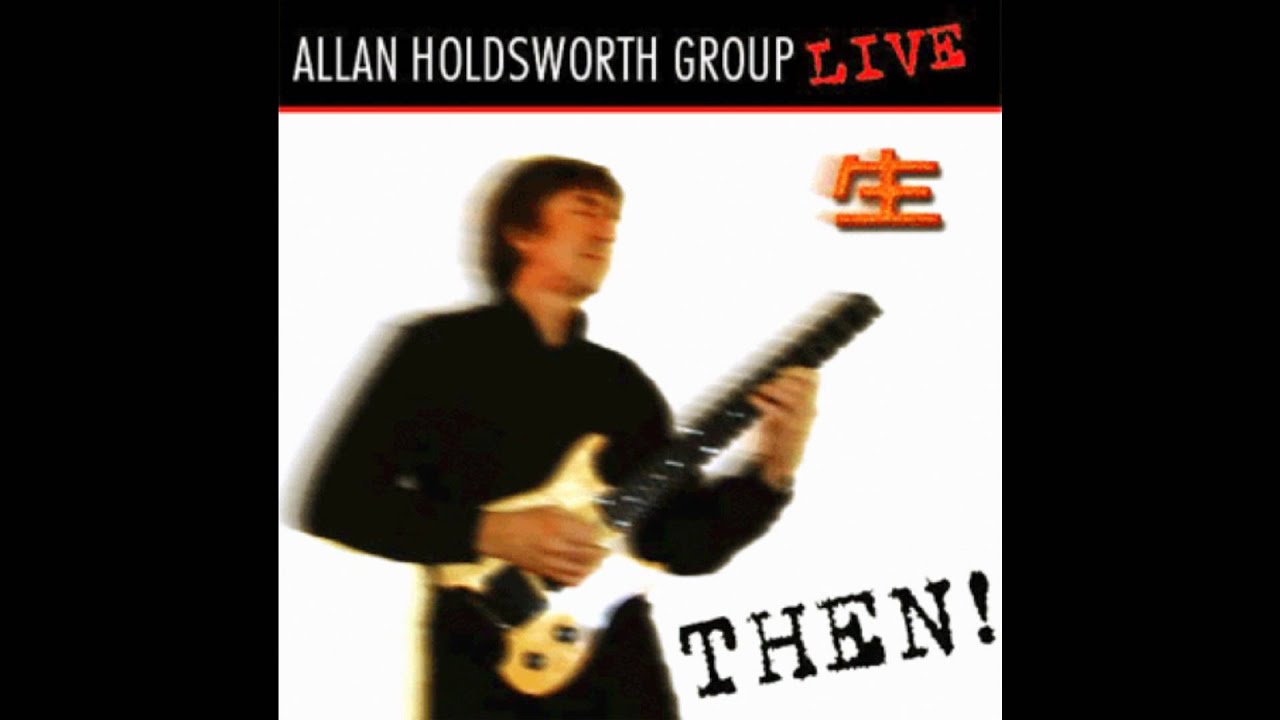
And from the clouds, an explosion of notes from a 20th century Mozart whose passing over two years ago now I still mourn.
5 Likes
Loved listening to this. I just finished a biography of Charlie Parker and the author went into his self-taught improvisational genius. I understand that Allan H. was mostly improv on this one here? Any good biographies? or is it too soon? It is so wonderful and sad that most (?) genius is not recognized during the gifted one’s lifetime! Not just artists, in everything. Just this week, discovered Pauli Murray in JANECROW: The Life of… in which we learn of this genius who was at the root of so many breakthroughs in law and visionary justice.
On music, I am stretching into jazz , hasn’t been familiar to me, but improvisation is something I’ve all my life loved, just haven’t explored deeper regions of jazz- the- genre, compared to jazz the mode of moving musically.
I was stunned to learn there are 5000 scales in East Indian music, and I think about 75 in “western” music … and that arrowing, did i happyen since the west officially left analog tuning for “temperered” mathematical notes/octives??
Thanks for this taste of Holdsworth. Can you say more about missing him?
5 Likes
I’m sure missing him is tied up with missing the youth of which his music formed part of the soundtrack.  But like you said ‘improvisation’ could have been his middle name. I’ve read he made and memorized charts which laid out the relation of every fretboard note to every other. I don’t remember where but I saw a YT video once where he actually has trouble soloing over a simple three chord progression (alcohol notwithstanding) - he was just no longer comfortable cycling through less than six in his head LOL.
That said, look up “Oneiric Moor”. (I have much trouble loading things from my phone.) He was fully capable of slow, thoughtful wistfulness as well…
4 Likes
Just listened to Oneiric…you are right: "slow, thoughtful wistfulness’… a mood I love.
I can understand having trouble with being limited to three (especially major) chords. I always long for a few of the strange ones, at least one or two to take refuge in, when the predictables feel stale…
Thanks, TJ!
1 Like
Just so you know: I’m anything but an expert in such matters, but since I’ve been trying to learn to play the blues harp (I played clarinet as a kid), I’ve been trying as well to understand what it is I’m doing. So, anything I say is nothing more than cobbled together fragments based on that. Still, I had a couple of random thoughts on the subject, if I may.
(Let’s call it Western) Music Theory goes back to Pythagoras (c. 570 – c. 495 BC) and his work on the Monochord: take a string, stretch it on a block and pluck it, and you get a tone; hold down (or fret) the string in the middle and pluck one of the halves, and you get the same tone exactly one octave (perhaps something of a misnomer, but that’s what we call it) higher. Tones are in this sense expressions of quite precise mathematical relationships, that is, the relationship of frequencies to one another. The string (of that Monochord) is, of course, infinitely (analogically) subdividable, like the strings on unfretted instruments, like violins, etc. Which tones we choose, of course, is somewhat arbitrary.
We, in the West, “decided” that there are twelve semitones in a chromatic scale, and eight in a major (or diatonic) scale (do-re-mi-fa-so-la-ti-do, whereby the last do is an octave (from octo, 8) higher than the first one. And every note gets a number or a degree, and we make music on the basis of intervals (the number of tones/semitones between notes), such as major fifths, minor thirds, augmented sevenths, and so on. As far as keys for scales are concerned, we have decided on 12 (see the so-called Circle of Fifths for an overview) of these, and each of these has a major and three minors associated with them, plus more recently developed scales such as the blues or pentatonic (prevalent in C&W, for example) scales as well (and others are thinkable). (So if you add them together, 1 major, 3 minor, 1 blues, 1 pentatonic = 6 * 12 scales = 72 scales, to start. Of course, others are possible: for example, most Native American flutes are sextonic, and they can be tuned to any of the twelve keys.) But, when you add the notions of tempo and rhythm, well, you start getting a exceptional ranges of possible variations that we call “music”.)
At root, though, music is about relationships and proportions more than anything else, and what “sounds good” has a lot to do with that. Playing three (of four) notes at one time is what we generally understand to be a chord and it is the progression of these chords that makes a song, at least in a sense. There are four types of chords: major, minor, diminished, and augmented; and there are a wide range of variations possible. Most pop, country, blues, and even classical music is based on a I-IV-V progression, but you would be hard-pressed to find a song these days that sticks to that. (Minimalists, like Punk or German New Wave, reduced this to two, or even just one chord; lots of jazz and people like Holdsworth took this notion is new directions (for our ears).)
For some ears, Chinese or Indian music is disharmonic (though it is simply an expression of different relationships than we here may be used to). Of course, the music greats have always allowed themselves to be influenced by other “systems”, if you will, and over time even Western music has evolved as a result. (This was especially obvious in the 70s and later when many jazz musicians were tuning into and picking up on Indian influences, for example. But over a much longer timeframe many African influences flowed into what was later to be the Blues.
And proportions and relationships brings us back to the Pythagorean monochord and its consequences. It finds it graphic expression in what has come to be known as the Lambdoma,

which is a depiction of not only tonal relationships but a whole cosmology, when you get right down to it. (One axis is the infinitely large – 0, 1, 2, 3, … infinity; the other is infinitely small – 0, 1/1, 1/2, 1/3, … eternity (?).) But, the understanding and application of this “tool” opens wondrous vistas as well.
At bottom, all is vibration. Even if we humans are “walking quantum wave functions”, as Wendt maintains, those functions are expressions of frequencies. As Berendt points out in Nada Brahma, water (or a molecule of water, I should say) vibrates as a C note. In other words, everything is sound. (And this means that a case can be made that hearing is the primordial sense, but that’s a whole other discussion.) Hans Kayser’s science of harmonics (whereby you got thae previous link only because it’s hard to find a lot on Kayser in English) aimed at demonstrating just how pervasive the notion of sound extends through physical reality; his chief analytic tool: the lambdoma.
At any rate, I only wanted to point out that all music is in a sense “mathematical” (though “geometric” may be more meaningful), but given that the spectrum of vibration is analogically infinite, there is an infinite number of ways in which it can be divided to make it more comprehensible. The beauty of what has gone before is that different ways have been identified and developed, enabling those of us who have come after to compare, contrast, combine and conceive of for the enhancement and uplifting of all, if not for the cosmos as a whole.
6 Likes
Beautifully put. (Your “cobbled together fragments” and “random thoughts” are quite rich and I’ll bet I’m not the only one who is quite unsurprised.  ) I think your point is the point: sonic, visual, and literary art (and along with Hayden White I would locate history and other humanities among the last) is about selection. Though culture and temperament, etc., may limit our mortal and finite appreciations (no judgment - it’s who we are), it is good to keep in mind that “infinity” literally leaves room for endless innovation. At any rate, the lambdoma is a whole cosmology alright!
Of all my five senses, hearing gives me the longest 360-degree reach from any given position of my head. Just sayin’… LOL
3 Likes
'Tis no laughing matter.  Even in the womb, the fetus picks up vibes of what the mother encounters, or is listening to while going about chores. And as you point out, hearing is the only one of our primary senses that allows for spatial orientation.
While I agree that touch is highly underrated (and for me, taste, is a touch-derivative), hearing plays a very special role in our evolution and our being. Of course, I’m not one of those people who has a “favorite sense”. It was my new go at music, though, that led me to a whole new appreciation of sound in general.
Without even going into all that’s probably possible, the mind boggles at what “simple” I-IV-V+ variations can produce. There were some wiseacres back in the 70s (scientists, no doubt) who predicted that we’d soon have no new music because there are only a finite number of combinations possible. I doubt that seriously, but given the range of variations of the basic building blocks of music (keys, scales, chords, progressions, tempo, rhythm …) that finite is significantly large, maybe even large enough to appear as infinite.
4 Likes
True. Gotta know where that tiger is…
I’d heard that somewhere as well. And I agree with you: even in the age of recording we are nowhere near exhaustion of “a finite number of combinations”. Take the barely-scratched-the-surface variety of contributions in this thread for example.
4 Likes
What a beautiful little essay on some of the roots of music, and some of the flowerings.
I have not studied Pythagorus much at all, and I see that I should! My musical “education” is very fragmented. I taught myself guitar (knowing nothing! And I do not exaggerate here), not even the chords, it was entirely : pluck or strum and listen. I memorized by hearing and made up my own names or had no names. I “composed” songs this way too and sang. Later I found out what notes and chords were and taught myself to read music, and a few other things. I attended a course on the ancient roots of music: the modes, such as myolydian (Lesbian) said to be invented or more accurately “discovered” by Sappho, then renamed and we all know why… But there are many modes, and as I understand it, all of traditional classical Western music is inside one of those modes, with perhaps accents in some of the others, and now I can’t remember the name of that mode! However when I put things into the pattern you’ve suggested and “drawn” here, I find some missing pieces of the web which I’ll look into further.
I’ve done most things “by ear” for so long, that when I (rarely) play with others, it’s a struggle UNLESS we are improvising. My music reading is slow and poor at this point, as is my systematic knowledge of chordal progressions et al, but I can HEAR my way into singing harmony with any sort of music at all, even if I don’t know the piece/song at all. So it’s kind of a question of those missing pieces. And of time! Because I have to choose where to spend my pennies of energy. I am listening right now to Gregorian Chant which I love so much, my body loves it as an animal loves warmth. So many musics!
Your writing here has helped me put together some pieces of the musical map. And yes, it even moves into the spiritual. My former meditation teacher showed us that light/color is much faster than sound, but it’s aall vibrations on the Grand EM Piano, so to speak, the cosmos and you and I are playing/played on/by that Infinite Instrument and Musician in changing-concord , even as we, in our tiny (fractal?) lives might feel agonized or uplifted and everything in between, and home again…
Thank you, Ed.
3 Likes
Yeah, my first thought was of Joni Mitchell and her dozens of guitar tunings and hundreds of odd chords… lots of room for everybody. Come on in, the waves are deep and wide…
PS: how in heck did you get that upsidedown smilie, love it!
2 Likes
And didn’t physicists not so long ago claim we’d reached the edge of knowledge…and oh, dear, now what vibes were everywhere for awhile?!
Pretty amusing (pun intended)…
3 Likes
One needs be careful with Pythagoras. He can be a trickster of sorts: he’s keen to say, “Here’s the way in”, but once there, it’s hard to find one’s way out.
3 Likes
Contact…!

listening-hearing to the Word Vibrations of Ed,Tj,& Ariadne…No seeing -distance separation …Just


4 Likes
 ))))))))))))) (AI insists, against my will, that I enter 15 digits, I mean letters!)
2 Likes
Huh! I replied to this post of yours and now it seems to have, um, gone poof!
What I said was: so Pythagoras is a trickser??
For me, that only increasing the attraction!
And what about that upsidedown smile?
3 Likes
 It should be somewhere in your emoji list; you may have to scroll a bit.
 For a long time I was intrigued by the sound of C#m7#9 played at the second fret position.
 I wish I could read music. I wish I had been a more patient eight-year old…
 After Gregorian chant comes Hildegard of Bingen, Guillaume de Machaut, and Thomas Tallis. These are places of bliss for me.
6 Likes